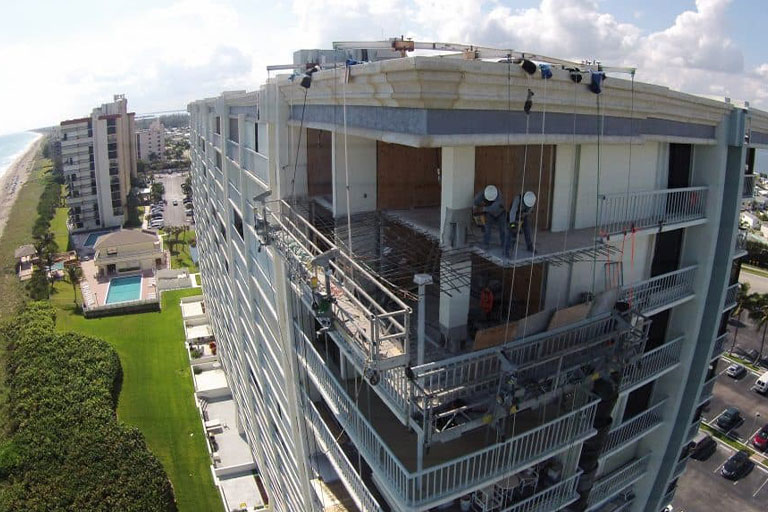




Integrated Water Management in Concrete Restoration: The Key to Long-Term Structural Protection in Fort Lauderdale
February 27, 2026
The Cost of Doing Nothing: Florida’s Milestone Inspection Law and the Penalties for Non-Compliance
May 7, 2026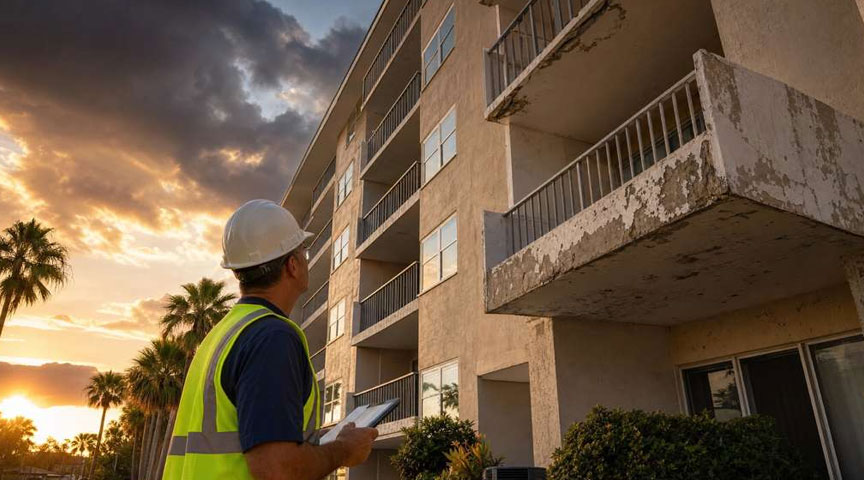
In Florida, milestone repairs are no longer optional. Following the passage of Senate Bill 4-D in 2022, condominium and cooperative buildings three stories or higher must undergo mandatory milestone structural inspections at 25 or 30 years depending on proximity to the coast, and every 10 years thereafter. The findings of these inspections frequently uncover structural and envelope deficiencies that, if ignored, threaten the safety, value, and insurability of the property.
For property managers, condominium boards, and building owners, the question is not whether milestone repairs will be required. The question is whether you will address them proactively, on your terms, or reactively, under pressure from inspectors, insurers, and residents.
This article outlines the three core disciplines that define a complete milestone repair program: concrete restoration and structural corrections, waterproofing and leak prevention, and painting and protective coatings. Together, these systems form a continuous shield that preserves the structural integrity and aesthetic value of your building for decades.
Concrete Restoration & Structural Corrections
Concrete is the backbone of nearly every multi-story building in Florida. It carries loads, defines shape, and protects the steel reinforcement (rebar) embedded inside it. When concrete is exposed to chloride-laden coastal air, humidity, water intrusion, or chronic stress, it begins to fail quietly at first, then visibly through cracks, spalls, exposed rebar, and structural displacement.
Common conditions we correct:
- Spalling concrete — surface failures where chunks break free, often exposing corroded rebar
- Carbonation and chloride contamination — chemical degradation that compromises the concrete's protective alkalinity
- Cracked balconies, walkways, and slabs — structural fractures that compromise load distribution and allow water ingress
- Corroded post-tension cables and reinforcement — a leading cause of structural failure in coastal high-rises
- Column and beam deterioration — load-bearing elements requiring engineered repair
- Stucco delamination — exterior cladding separating from its substrate
Our restoration process:
Every project begins with diagnosis. We work alongside structural engineers to map the extent of deterioration using sounding, chain-drag testing, half-cell potential surveys, and core sampling where required. From there, repairs follow a disciplined sequence: removal of deteriorated material, sandblasting and treatment of exposed rebar, application of corrosion inhibitors, installation of supplementary reinforcement when needed, and patching with high-bond, polymer-modified repair mortars engineered to match the parent concrete.
We do not patch over problems. We correct them at the source.
Waterproofing: Complete Leak Prevention Systems
Water is the single greatest enemy of any structure in Florida. Driven by hurricane-force rain, sustained humidity, and thermal cycling, water finds every crack, joint, and unprotected surface. Once it penetrates the building envelope, the damage cascades corroded rebar, deteriorated concrete, ruined interiors, mold growth, and ultimately structural compromise.
A milestone repair program without comprehensive waterproofing is incomplete by definition.
The waterproofing systems we install:
- Horizontal surfaces. Balconies, walkways, plaza decks, and parking structures receive traffic-grade pedestrian or vehicular waterproof coatings. These multi-layer urethane and polyurethane systems combine waterproofing performance with slip resistance and aesthetic finish.
- Vertical surfaces. Building façades, stucco walls, and exposed concrete receive elastomeric waterproof coatings designed to bridge hairline cracks while remaining vapor-permeable. This allows the wall to release internal moisture without admitting bulk water.
- Expansion joints and sealants. Properly designed and installed expansion joints absorb building movement. We replace failed sealants with high-performance polyurethane and silicone systems sized to the joint geometry and movement profile.
- Below-grade waterproofing. Foundation walls, planters, and below-ground structures require dedicated systems engineered to resist hydrostatic pressure.
Why complete systems matter:
Waterproofing is not a product. It is a system. A single weak point at a flashing, a joint, or a coating termination defeats the entire installation. We design and install waterproofing as a continuous, integrated barrier, with detailing, sequencing, and quality control documented at every stage.
Painting & Coatings: Protective Exterior Finishes
The final layer of any milestone repair program is paint. But this is not cosmetic work. Exterior coatings are an active part of the building envelope, contributing waterproofing, UV protection, and chemical resistance that extends the service life of every surface beneath them.
What we apply:
- Elastomeric coatings. High-build, flexible coatings that expand and contract with the building, bridging hairline cracks and providing a continuous waterproof membrane on stucco and concrete walls.
- 100% acrylic coatings. For substrates that do not require crack-bridging performance, premium acrylics deliver superior color retention, mildew resistance, and adhesion.
- Specialty coatings. Polyurethane finishes for high-wear surfaces, epoxy systems for parking structures and mechanical rooms, and anti-graffiti coatings for ground-level walls.
- Reflective and cool-wall coatings. Energy-efficient finishes that reduce heat gain and lower cooling costs in Florida's climate.
How we prepare:
Coatings only perform as well as the surface beneath them. Our preparation includes pressure washing at calibrated PSI, biocide treatment for mildew and algae, mechanical surface profiling where required, full primer application, and crack treatment with elastomeric patching compounds prior to topcoat installation. We follow manufacturer specifications without shortcuts, and we document every step.
Color and aesthetics:
We coordinate with associations, designers, and unit owners to select palettes that match brand standards, comply with local architectural review requirements, and refresh the property's market presence. A correctly executed coating project does not only protect the building it elevates it.
Why Milestone Repairs Cannot Wait
Deferred maintenance compounds. A small crack admits water. Water corrodes rebar. Corroded rebar expands and breaks the surrounding concrete. The crack becomes a spall. The spall becomes a structural concern. The structural concern becomes an emergency repair, an insurance claim, a special assessment to unit owners, or worse.
Every season of delay multiplies the cost of correction.
Properties that address milestone findings on a planned schedule pay for repairs once. Properties that wait pay several times for the original repair, for the collateral damage, for the legal and regulatory exposure, and for the lost market value.
Working With the Right Contractor
Milestone repair work is specialized. It requires:
- Licensed general contracting credentials with a verified track record in restoration
- Coordination with structural engineers, architects, and building officials
- Fluency in association governance, owner communication, and phased construction in occupied buildings
- Manufacturer certifications for the specific waterproofing and coating systems specified
- Insurance, bonding, and safety programs that meet the standards of professionally managed properties
We bring all of this. More importantly, we bring a single point of accountability concrete, waterproofing, and coatings delivered as one continuous program, by one contractor, on one schedule, under one warranty.